My asia, Fascinated by Oceania, Civilized Europe, Wild Africca, Across North and South America
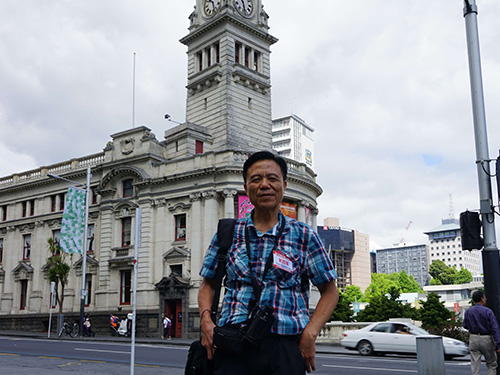
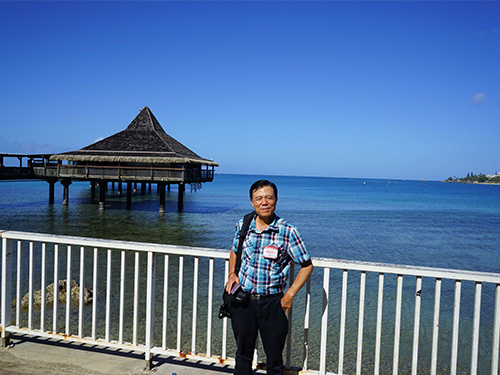
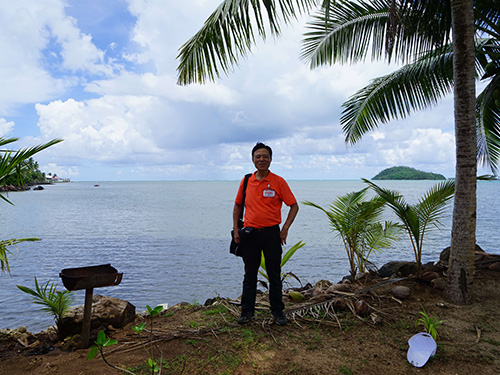
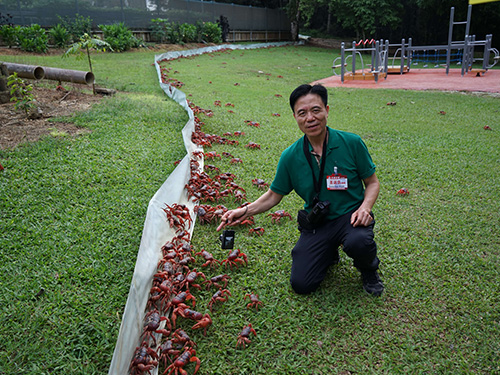
Oceania, the smallest continent in the world, has a total area of 8.97 million square kilometers, of which Australia covers an area of 7.69 million square kilometers, including 27 countries and regions. In addition to Australia, New Zealand, Papua New Guinea, etc., the other ten thousand islands belong to the three major island groups in the Pacific: Melanesian Islands (meaning black islands), Micronesia Islands (meaning small island islands), Polynesia Islands (meaning multi-island archipelago). In 2018, Oceania had a total population of approximately 40 million, making it the world's least populous continent except Antarctica. Over the past 20 years, I have visited Oceania 10 times, and each trip lasted as little as half a month and as long as a month. From 1998, I visited Australia and New Zealand for the first time, and now I have traveled all over the islands, and I have set foot in many places more than once, such as Samoa five times. My understanding of Oceania is also gradually improving. 50,000 years ago, Southeast Asians traveled across oceans and settled in Australia, becoming the first group of aboriginals in Oceania. This is the result of the latest archaeological discoveries. In terms of human history: on the Asian continent, there are Yuanmou ape-man fossils found in Yunnan, China, more than 1.7 million years ago; on the African continent, there are female ape-man fossils found at the junction of Kenya and Ethiopia, 3.2 million years ago. Therefore, the 50,000-year history of Oceania is not a long timeline. However, compared with other continents, Oceania clearly retains its historical footprint, and is called the "living fossil" for studying ancient organisms by the scientific community. On this land, ancient songs can be heard everywhere. The proportion of indigenous people in Papua New Guinea is as high as 99%. In the era of great navigation, European voyagers began to explore routes to Oceania. However, these early explorers only arrived here and did not establish a colony. It was not until 1768 that a British navigator, James Cook, set off from England on the "Endeavour". This voyage lasted 8 months and finally docked in Tahiti. In the following years, Captain Cook made two more Oceania voyages and boarded the islands of New Zealand, making an important contribution to exploring the South Pacific. In Oceania now, there are many island sites and monuments of Captain Cook in memory of this great navigator. Now there is an archipelago between Tahiti and Fiji—the Cook Islands, which is named after Captain Cook. When I was visiting Oceania, I read "Captain Cook's Diary". In the diary, we can see the early collision between Western civilization and indigenous civilization. On October 9, 1769, as the speedboat was going down, the Indians still chased him. Seeing that the ship-borne helmsman was in a bad mood, he fired two shots over the heads of the indigenous people. The first shot was fired, the second shot followed, and then the third shot. An indigenous man was killed on the spot as he was about to throw a javelin at the speedboat. After the native fell, the other three natives were stunned and remained motionless for two to three minutes. They didn't understand what had killed their companion so strangely. However, when they woke up, they immediately ran away, dragged the deceased a short distance, and then threw it down. -"Captain Cook's Diary" For strange landers, the natives were surprised and panicked, showing instinctive resistance and rejection. However, spears and broadswords could not compete with gunfire and ammunition. They were gradually "pacified" by force, had to accept them, and gradually changed their original way of life. So far, the antagonism between the two has been greatly changed. Indigenous people walked out of the tribe, moved to modern buildings, participated in social affairs, and received corresponding respect and rights. Take Australia as an example. In 1901, when Australia conducted the census, indigenous people were excluded. By 1967, Australia had amended its constitution, and Aboriginal people also had the same voting rights. At the same time, in order to better protect the indigenous culture, schools opened aboriginal language teaching and the media increased aboriginal language programs, etc., striving to create a diverse and inclusive social environment, which is a positive aspect of promoting the integration of civilizations. But during the inspection process, I also saw the aboriginal hesitation, facing the collision between primitive and modern, they don't know where they are going. I have thought a lot about this. Regarding modern times, human beings have given interpretations in different fields. However, there are still divergent opinions about the primitive, and no unified answer has been obtained. In many places in Oceania, it retains a strong original style. In terms of development status, the productivity of these areas is lagging, the economic level is low, and many people live in poverty. During my inspection, I tried my best to record its current characteristics, tap its development potential, and bring it back to my research team (Hong Kong Chinese Urban Competitiveness Research Association, Chinese and Foreign Urban Competitiveness Research Institute, Gui Qiangfang Global Competitiveness Research Association) Information, further discussion. In this book, each chapter provides a basic overview of the country and region, including four star index evaluations: competitiveness star index, beauty star index, safety star index, tourism star index, All are the results of the research team. In terms of natural culture, these places have great beauty, rare species and unique sociality. I watched the world’s unique spectacle on Christmas Island-the Red Crab Migration; in the Federated States of Micronesia, I explored the Mayan civilization site-the ancient city of Lanmadol; in Papua New Guinea, I heard the beautiful singing of the bird of paradise; in Pitkay The En Islands learned about a government with only 45 people; the Kingdom of Tonga greeted the world’s first light on that day; and so on. This is exactly what I hope to recommend and show to the public with this book. They are waiting for the world's exploration in Oceania with their distinctive characteristics. These areas are gifted by nature, with luscious coconuts and tender breadfruit, and the products are very rich. The most important thing for people is time. For example, in Pitcairn, people there like to sit at the pier, looking at the sea, looking forward to the cruise line coming from the sea line, waiting for the container with daily necessities, and looking forward to the tourists on the island; In places like Tonga and Fiji, people like to lie down all day long. Fat is the beauty in these places. The fatter a woman is, the easier it is to marry. The fatter the man is, the more respected. Therefore, the lifestyle of "eat and sleep, wake up and eat" has been developed. Of course, "primitive" and gregariousness coexist. In such a social situation, people will hold parties from time to time, singing and dancing, and express their vitality. I was in Oceania and listened to a lot of wonderful music and watched a lot of moving dances. I was deeply moved by the graceful figures that danced flexibly, and the friendly faces filled with smiles. This is from the original breath of life, there is a fanatical and lasting driving force that is inexplicable and unclear. It is like gushing magma, awakening visitors from other countries. In fact, this power lies in everyone. It draws me and makes me fall in love. The main part of the book is Oceania, in addition to Greenland, a Danish territory in the Arctic, Yellowknife Town in Canada, Alaska in the United States, and Antarctica, the southernmost part of the earth. These regions have a cold climate and sparsely populated people, especially the Antarctic continent. Due to extremely harsh natural environments such as extreme cold, dryness, and gale winds, no humans have settled here for a long time. There are only a few scientific research stations in various countries. Although the reproduction of animals and plants is greatly restricted, this does not mean that extremely cold regions are barren and desolate. On the contrary, here is the earth's "big warehouse", which contains abundant natural resources, including mineral resources, freshwater resources, marine biological resources, etc., which are in urgent need of exploration and development. I hope readers and friends can feel and pursue the primitive and vigorous life tension in Oceania, and at the same time understand the pure and peaceful beauty of the world in the icy and snowy Antarctic and Arctic regions. Gui Qiangfang May 1, 2021
Related tags:
Source:本站
Release time : 2021-11-06
Related News
- The mystery of ancient Egyptian pyramid construction has finally been solved 2021-11-08
- Caribbean Sea 2021-11-08
- Chinese outbound travel is a "goldfish tank travel" 2021-11-08
- Danes love to mark the spiral tower 2021-11-08